
How Heat and Humidity Affect Eyelash Extension Glue (2026 Expert Guide)
Hot weather, high humidity, and changing room temperatures can dramatically affect eyelash extension glue performance. Many lash artists notice worse lash retention during summer months, rainy seasons, or in overly dry environments. In reality, lash adhesive is extremely sensitive to environmental conditions.
Understanding how heat and humidity affect eyelash extension glue is essential for improving lash retention, reducing stickies, and creating longer-lasting lash sets.
In this complete guide, you’ll learn exactly how temperature and humidity impact lash glue, why retention problems happen, and how professional lash artists can achieve better results in every season.
Why Humidity Matters for Lash Extension Glue
Professional eyelash extension adhesives cure through contact with moisture in the air. Humidity directly affects how quickly the glue polymerizes and forms a bond between the natural lash and the extension.
When humidity levels are balanced, lash glue cures correctly and creates a flexible, durable attachment. However, when humidity becomes too high or too low, the adhesive may dry improperly and lead to poor retention.
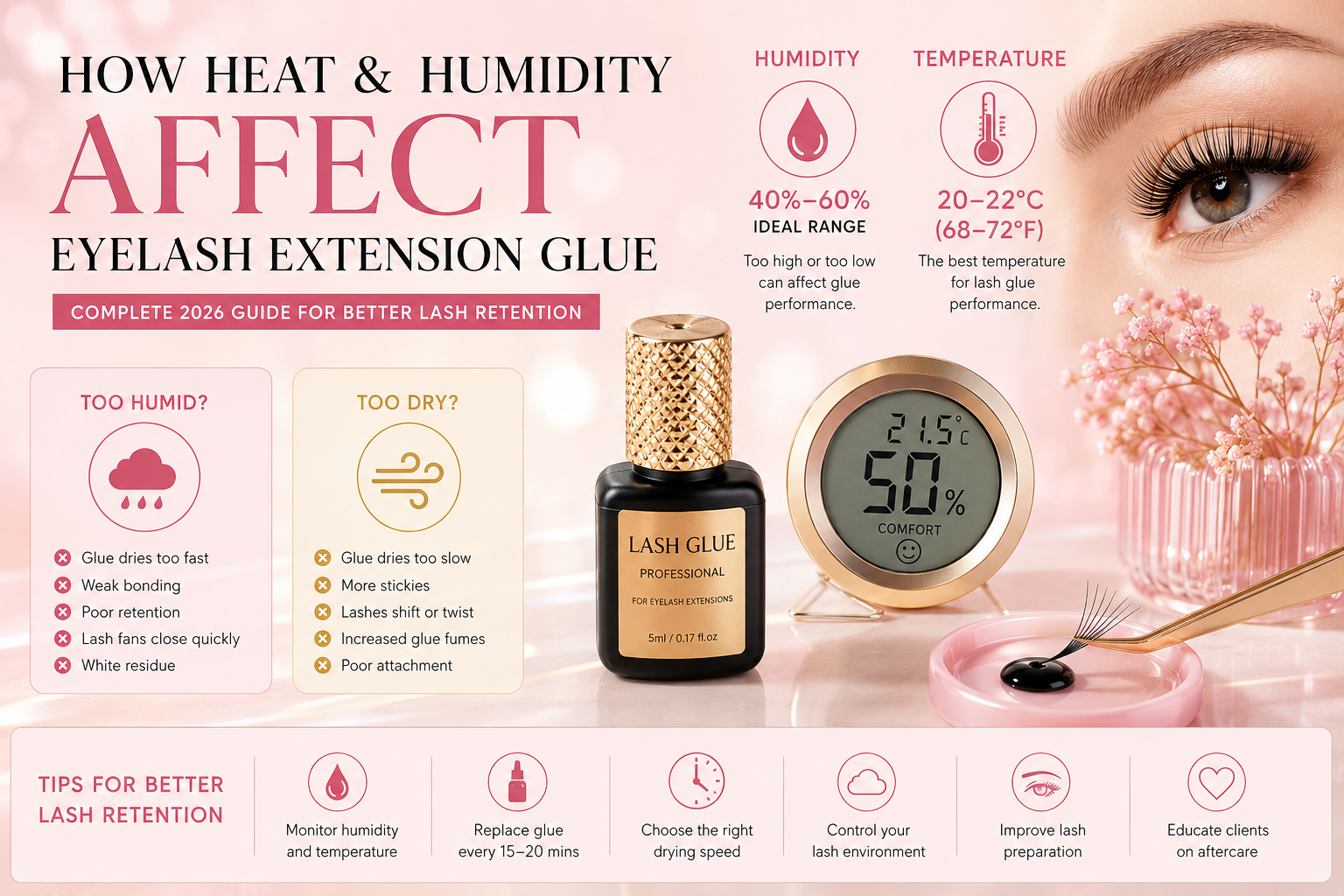
Most lash extension glues work best in environments between:
- 40%–60% humidity
- 20–22°C (68–72°F)
Small environmental changes can significantly affect glue speed, bonding strength, and overall lash retention.
What Happens When Humidity Is Too High?
High humidity causes eyelash extension glue to cure much faster than normal.
When the adhesive dries too quickly, lash artists may not have enough time to properly place the extension onto the natural lash. This often creates weak attachment points and causes premature fallout.
Common Signs of High Humidity Problems
- Lash extensions falling off early
- Weak glue bonding
- Brittle adhesive texture
- Lash fans closing too quickly
- Glue becoming thick or stringy
- Poor retention after fills
- White residue around bonds
Many lash technicians also notice that glue drops dry much faster on the lash palette during humid weather, especially during summer.
What Happens When Humidity Is Too Low?
Low humidity slows down the curing process of lash glue.
When adhesive cures too slowly, extensions may shift before fully attaching. This can lead to stickies, twisting lashes, poor direction control, and inconsistent retention.
Common Signs of Low Humidity Problems
- Lash glue drying too slowly
- Lash extensions leaning sideways
- Increased stickies between natural lashes
- More noticeable glue fumes
- Client eye irritation
- Difficulty creating stable fans
Dry environments are especially common during winter or in heavily air-conditioned lash salons.
How Heat Affects Eyelash Extension Glue
Temperature also plays a major role in lash retention.
Higher temperatures accelerate chemical reactions inside the adhesive, causing lash glue to cure faster. Excessive heat can shorten working time and make application more difficult for lash artists.
Problems Caused by High Temperatures
- Glue drying before proper placement
- Lash fans collapsing
- Adhesive thickening too quickly
- Poor lash retention
- Faster glue expiration
- Reduced flexibility of the bond
Heat can also damage unopened lash glue bottles if stored improperly. Lash adhesives should always be kept in a cool, dry environment away from direct sunlight.
Best Environment for Lash Extension Retention
Maintaining stable lash room conditions is one of the best ways to improve retention and consistency.
Ideal Lash Room Conditions
| Factor | Recommended Range |
|---|---|
| Humidity | 40%–60% |
| Temperature | 20–22°C (68–72°F) |
| Glue Refresh Time | Every 15–20 Minutes |
| Storage Environment | Cool & Dry Area |
Professional lash artists often use digital hygrometers to monitor room conditions throughout appointments.
How to Improve Lash Retention in Hot and Humid Weather
1. Monitor Room Humidity
Using a hygrometer helps track humidity and temperature accurately. Without monitoring the environment, it becomes difficult to understand why glue behavior changes from day to day.
2. Replace Glue Drops Frequently
During hot or humid conditions, lash glue thickens faster on the adhesive surface. Replacing glue every 15–20 minutes helps maintain optimal performance.
3. Choose the Correct Glue Speed
Different environments require different adhesive drying speeds.
- Humid climates usually work better with slower-drying glue
- Dry environments may require faster-curing adhesives
Matching glue speed to room conditions can dramatically improve retention.
4. Control Your Lash Room Environment
To stabilize conditions:
- Use a humidifier in dry environments
- Use a dehumidifier during humid seasons
- Avoid placing fans directly near glue
- Keep room temperature stable
- Minimize sudden environmental changes
5. Improve Lash Preparation
Oil, sweat, skincare products, and dirty lashes can worsen retention problems during summer.
Proper lash cleansing before application helps improve adhesive bonding and retention longevity.
Does Summer Weather Affect Lash Extensions?
Yes. Summer weather can shorten lash retention because clients are exposed to:
- Sweat
- Heat
- Humidity
- Swimming pools
- Steam
- Sunscreen
- Increased oil production
Clients may require more frequent lash fills during hot and humid seasons.
Educating clients about proper aftercare can help reduce premature shedding.
Best Lash Aftercare Tips During Hot Weather
To maintain eyelash extensions during summer, clients should:
- Clean lashes daily with lash shampoo
- Avoid excessive steam exposure
- Reduce oil-based skincare around the eyes
- Brush lashes regularly
- Avoid rubbing the eyes
- Schedule fills more frequently during humid months
Good aftercare helps maintain better retention regardless of climate conditions.
Final Thoughts
Heat and humidity have a major impact on eyelash extension glue performance. Because lash adhesive reacts directly with moisture in the air, even small environmental changes can affect curing speed, bonding strength, and retention.
For professional lash artists, controlling room conditions is essential for creating long-lasting lash sets and improving client satisfaction.
By understanding how humidity and temperature affect lash glue, lash technicians can adjust their environment, choose the right adhesive speed, and achieve more consistent retention results throughout the year.
Partager:
Best Lash Extensions for Hooded Eyes in 2026 (Complete Guide)
YY Lashes vs W Lashes: What's the Difference and Which Lash Style Is Best in 2026?